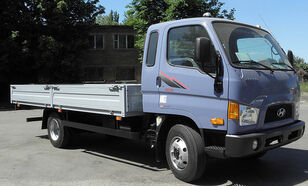
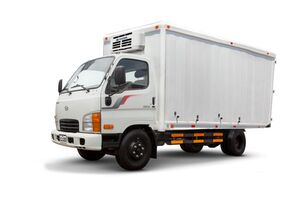
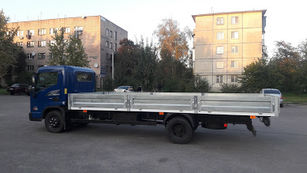
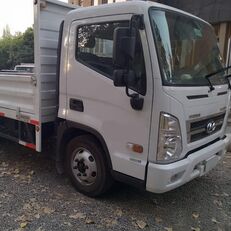
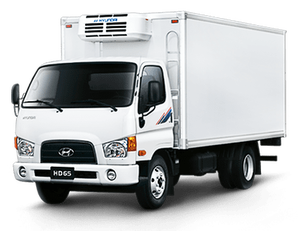
Hyundai trucks
14 ads: Hyundai trucks
Hyundai Trucks in Nigeria: Practical Commercial Transport for Work and Distribution
Overview of Hyundai trucks
Hyundai trucks cover a broad range of commercial vehicles designed for daily hauling, urban distribution, and regional transport. Across light- and medium-duty classes, they are commonly selected for predictable operating costs and straightforward service needs. In the commercial vehicle segment, Hyundai is positioned as a high-volume manufacturer with a reputation for durable drivetrains and consistent parts support in many markets, making the brand a practical option for fleet operators and owner-drivers.
Technical profile and operating strengths
Typical configurations include cab-over layouts for tight turning circles, payload-focused chassis options, and body compatibility for cargo, tipper, tanker, and refrigerated builds. Diesel powertrains are tuned for torque delivery at working speeds, supporting stop-start delivery routes as well as highway runs. Key advantages for day-to-day operations often include:
- Efficient packaging and visibility for city logistics
- Strong torque for loaded starts and hill work n- Durable frames suited to body conversions
- Service-friendly access that can reduce downtime
Compared with some alternatives in the same class, these trucks are often valued for balanced fuel economy, practical cab ergonomics, and good availability of common maintenance items.
Hyundai trucks in Nigeria: demand drivers and use cases
In Nigeria, demand is shaped by the need to move goods reliably between ports, industrial zones, and retail centers, as well as within cities where congestion and limited loading space favor compact cab-over designs. Common applications include FMCG distribution, building materials transport, market supply runs, and last-mile delivery for e-commerce. Heat, dust, and mixed road conditions increase the importance of cooling performance, suspension durability, and routine preventive maintenance. Economic factors—fuel costs, utilization rates, and access to competent workshops—also influence total cost of ownership and keep dependable, easy-to-service trucks in focus.
Hyundai trucks price, suitability, and selection criteria
These vehicles are well suited to SMEs, contractors, logistics firms, and mixed fleets that need adaptable platforms and consistent uptime. Main reasons for choosing them typically include flexible body options, manageable maintenance requirements, and operating efficiency for both urban and regional routes. When assessing price and specifications, buyers often compare payload, axle rating, emissions standard, and parts availability to match the truck to its duty cycle and expected annual mileage.
Prices for Hyundai trucks
| Hyundai EX10 | Year of manufacture: 2025, fuel: diesel, suspension: spring | ₦93,179,276.93 |
| Hyundai EX8 | Fuel: diesel, axle configuration: 4x2, suspension: spring | ₦45,799,983.58 - ₦85,282,728.04 |
| Hyundai EX10 | Load cap.: 7,015 kg | €35,140 |
| Hyundai EX8 | €33,060 | |
| Hyundai EX8 | Load cap.: 5,000 kg | €38,280 |
| Hyundai PAVISE | €65,940 | |
| Hyundai EX6 | Euro: Euro 4, power: 158 HP (116 kW), load cap.: 4,005 kg | €28,760 |
| Hyundai HD60 | Load cap.: 4,160 kg | €27,750 |
| Hyundai 150W-9 150W | Year: 2023, power: 152 HP (112 kW), load cap.: 15,000 kg | €24,530 |